|

|
|
|
|
|
|
|
|
|
|
|
|
|
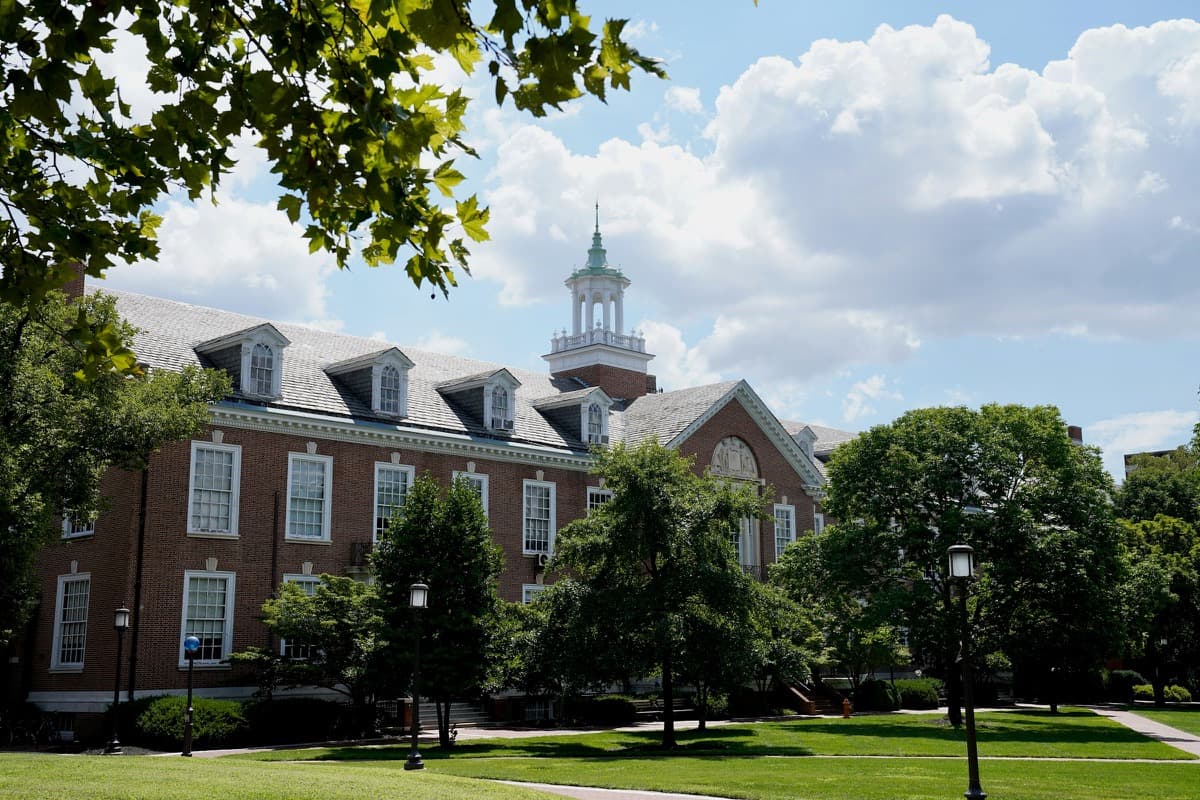
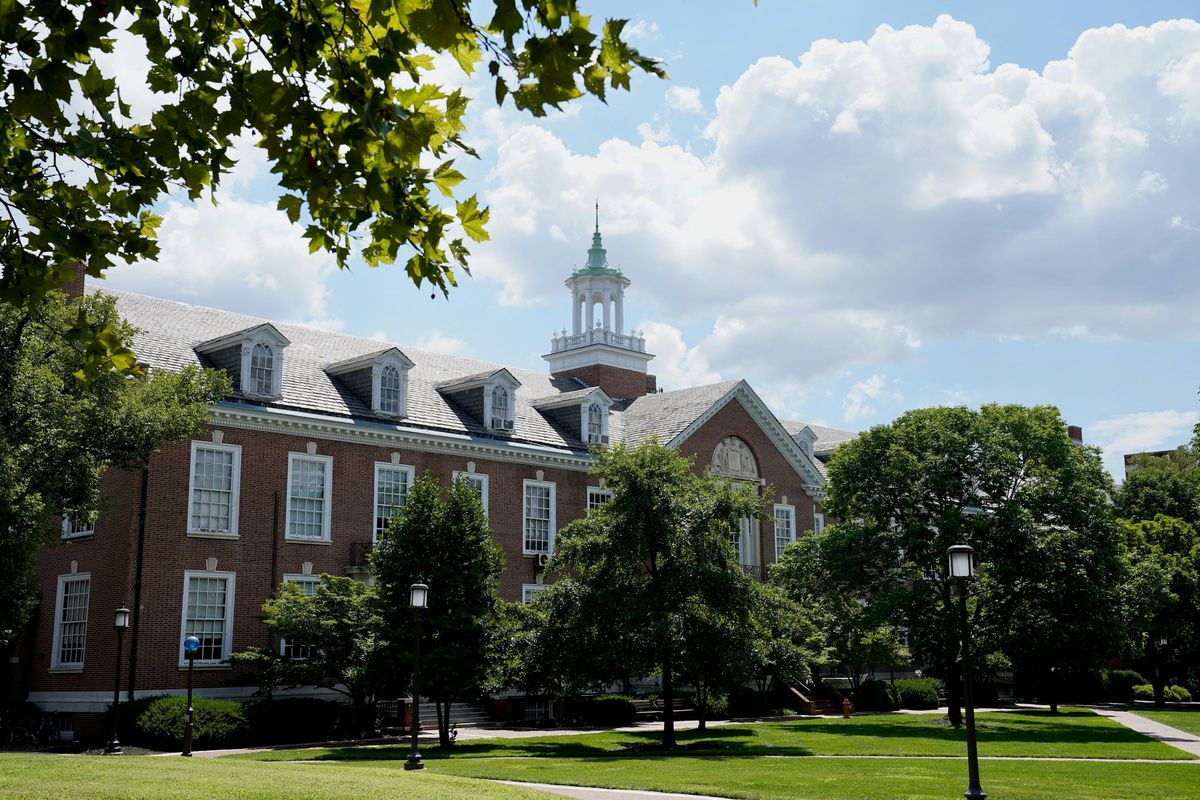
Illustrative — Harrington College is fictional; the campaign is real output.
Campaign Type
Giving Day
Theme
Access Fund
Match
2:1 match up to $500,000 (Trustees' Challenge)
Sequence
9 emails
10-day campaign
Photo via Unsplash
Four inputs made this campaign — your voice, an AI advisory board, your institutional point of view, and a strategist blueprint.
Voice
Donation Ask
Your education was made possible by Harrys who came before you—now it's your turn to pay it forward for the first-generation students counting on that same access today. A gift of any size builds Harrington's collective impact and keeps our commitment to meet 100% of demonstrated financial need within reach for the next student who needs it most.
Advisory Board
3 AI advisors consulted
Institutional POV
## Believes - Access to a world-class liberal-arts education is a matter of intellectual promise, not inherited wealth — and any institution that fails to enforce that distinction has abdicated its core purpose. - Giving to the Access Fund is not charity extended downward; it is a debt repaid forward — alumni who were carried by prior generations bear a specific obligation to carry the next. - A first gift at any size is a full membership act: the donor has joined the community that keeps the door open, not merely made a transaction. - The Trustees' Challenge match is not an incentive layered onto a campaign — it is the visible proof that collective action multiplies individual stakes, and communicating its finite limits honestly is itself a form of trust-building. - The most powerful argument for giving is a single student with a name and a future, not an aggregate statistic about class demographics — human empathy runs through the particular, not the general. - Donor retention is a moral commitment, not a tactical metric: a first-generation student who gives for the first time and is then ignored has been taught that the compact does not apply to them. ## Emphasizes - The inter-generational compact as the organizing frame — every ask is situated inside a chain of obligation stretching backward and forward through alumni cohorts - Identifiable students as the emotional core of every appeal — named, storied, specific individuals whose intellectual promise would have gone unrealized without the fund - The 2:1 Trustees' Challenge as genuine scarcity, not manufactured urgency — its finite match pool is a real deadline that demands honest, timely communication - First gifts as belonging acts — the rhetorical emphasis is on joining a community, not on the dollar amount, making size a non-barrier to entry - Impact closure as a stewardship non-negotiable — every donor must learn what their gift actually accomplished before the next ask arrives - Reciprocity as the psychological engine — the match simultaneously doubles perceived impact and activates the donor's sense of obligation to a community that already moved on their behalf - Acknowledgment speed and authenticity — thank-yous must come from non-development voices (students, faculty, deans) and arrive within 48 hours, because the first gift's second life depends entirely on that moment ## Refuses - Framing giving as optional generosity or philanthropic charity — the compact language explicitly refuses the donor-as-benefactor hierarchy in favor of mutual obligation - Aggregate statistics as the primary emotional appeal — the institution refuses to lead with 'thousands of students' when one student's story is available - Treating gift size as a proxy for donor seriousness — the compact framing explicitly rejects the notion that a small first gift is a lesser act of belonging - Manufactured or vague urgency — the Access Fund's scarcity is real and must be communicated as such; fabricating pressure would corrupt the trust the compact depends on - Treating the acknowledgment as administrative rather than relational — a form-letter thank-you is a breach of the compact, not a fulfillment of it - Positioning the campaign as a development office transaction rather than an alumni community act — the voice of stewardship must come from the community, not from the fundraising apparatus ## Quotable texture - No capable mind turned away for want of means. - You were carried. Now carry. - A first gift at any size opens the door — the size of the gift is not the point; the act of opening is. - Your $25 becomes $75. The match is real, the deadline is real, and the student waiting on the other side is real. - The compact doesn't ask how much. It asks whether. - One name. One story. That is how the door stays open. - The thank-you is the first step of the next gift — and it must sound like the community, not the campaign. - This is a debt forward, not a donation down. - The match runs out. The obligation doesn't.
Blueprint Arc
9 emails across 4 phases
Launch → Social Proof → Objection Removal → Urgency Close
One per phase — Launch, Social Proof, Objection Removal, Urgency Close. Every fact shows its source; the notes explain why each was written the way it was.
|
|
|
|
|
|
|
|
|
|
|
|
|
|
|
|
|
|
|
|
|
|
|
|
|
|
|
|
|
|
|
|
|
|
|
|
|
|
|
|
|
|
|
|
|
|
|
|
|
|
|
|
|
|
|
Every donation begins or continues the relationship — here is the real first-gift stewardship sequence.

Names, amounts, and the giving link below are samples. The handwritten note and phone call steps show the donor-facing note and call script only — internal staff instructions are omitted. The message structure and cadence are real.
Immediately
From President
Dear Sam,
I wanted to reach out personally — within hours of your gift arriving — because that felt right.
Your $50 contribution to the Harrington Giving Day Access Fund matters more than a standard acknowledgment can convey. Thanks to the Trustees' Challenge, your gift is matched 2:1, which means $150 is now working on behalf of students who need it most. Every dollar in the Access Fund moves us closer to honoring Amos Harrington's founding conviction: "No capable mind should be turned away for want of means."
That promise is not rhetorical. Harrington meets 100% of every admitted student's demonstrated financial need. Right now, approximately 53% of our 2,050 undergraduates receive need-based aid, and the average grant is nearly $49,000 per year. The Access Fund is what makes that possible — and you are now part of the community of Harrys who sustain it.
Welcome. I mean that sincerely.
Dr. Ruth Okonkwo President, Harrington College Corley, Ohio
2 days later
Handwritten note
From Student
Donor-facing excerpt shown — internal staff instructions omitted.
Sam,
I'm a third-year student at Harrington, and I'm here because the Access Fund made it possible for me to say yes when I got in. I'm a first-generation college student, and honestly, Harrington was the school I most wanted to attend — a residential liberal arts college where I could study across disciplines and get to know my professors as people. Without need-based aid, I would have had to choose differently.
I don't take that for granted. And I wanted to say thank you — not from a development office, but from me.
Maya Ellison Akron, Ohio, Class of 2027
About 2 weeks later
From Dean
Dear Sam,
Harrington Giving Day is now behind us, and I want to tell you what happened.
Thanks to donors like you, we raised toward our $250,000 goal — and the Trustees' Challenge matched gifts 2:1, directing as much as $750,000 total into the Access Fund.
Your $50 gift was part of that. Alongside roughly 1,900 donors last year, and a growing number this year, you helped demonstrate that Harrington's commitment to access is a shared commitment — not something the institution sustains alone, but something the whole community of Harrys sustains together.
About 20% of our students are Pell-eligible. Seventeen percent are first-generation college students navigating a residential, liberal arts education without a family roadmap. The Access Fund gives them the same starting position as anyone else on this campus. That is what your participation secured.
We will send a full impact report in the coming weeks. In the meantime, thank you for being counted.
With appreciation, Dr. Neil Brandt Dean of Admission and Financial Aid, Harrington College
5 weeks later
From Development Office
Dear Sam,
A few weeks ago, your gift joined a collective act.
Harrington's annual financial aid budget runs approximately $58 million. Roughly 53% of our students — more than 1,000 people in a college of 2,050 — receive need-based grants averaging nearly $49,000 per year. That is not a number we arrive at through financial aid packaging tricks. It reflects a straightforward institutional promise: we meet 100% of every admitted student's demonstrated financial need.
The Access Fund, which your Giving Day gift supports, is one of the vital resources that makes that promise keepable. Unrestricted gifts to the Access Fund give us the flexibility to respond to students whose circumstances shift mid-year, to reach students we might otherwise have to turn away, and to grow the endowment that will sustain this commitment for generations of Harrys who haven't enrolled yet.
Amos Harrington put it plainly in 1887: "No capable mind should be turned away for want of means." That sentence is still the operating principle.
If you'd like to extend your support — or learn about sustaining it as a recurring annual gift — you can do so at https://example.harringtoncollege.edu/give/recurring. There is no obligation; we simply want you to know the option exists, and what it means to the students who benefit.
Thank you for your participation in Giving Day and in Harrington's broader community of support.
Jordan Alvarez Director of Annual Giving Harrington College
About 3 months later
Phone call
From Student
Donor-facing excerpt shown — internal staff instructions omitted.
"Hi, may I speak with Sam? … Hi, my name is Maya Ellison, and I'm a student at Harrington College calling to say thank you for your gift during Giving Day. I'm not calling to ask for anything — I just wanted you to hear from an actual student.
The Access Fund is part of why I'm here. Harrington meets 100% of demonstrated financial need, and that's not just a line in a brochure for a lot of us.
So, genuinely — thank you. Your participation in Giving Day is part of what makes this college what it is. If you have any questions about student life here or what it's like to be a Harry, I'm happy to talk. Otherwise, I just wanted you to know your gift was noticed."
About 6 months later
From Development Office
Dear Sam,
Six months ago, you made your first gift to Harrington. We haven't forgotten.
The Access Fund you supported is a perpetual commitment — not a campaign with an end date. Harrington's promise to meet 100% of every admitted student's demonstrated financial need is renewed each year, for each entering class. Last year's Giving Day drew approximately 1,900 donors. The most common gift was $50. Together, those gifts — at every level — built something that no single gift could build alone: collective impact that the endowment compounds year over year.
You are now part of that record. Alumni participation matters not just financially but institutionally. It tells prospective students and their families that the Harrington community stands behind its access promise. It tells accreditors and peer institutions something about who we are.
As we look toward next year's Giving Day, we'd like to invite you to consider becoming a recurring annual donor to the Access Fund. A sustained annual gift — at whatever level is right for you — is one of the most meaningful forms of support Harrington receives, because it gives us the flexibility to plan, to commit, and to pay forward what the Harrys before us made possible for us.
You can set up a recurring gift at https://example.harringtoncollege.edu/give/recurring, or simply reply to this email and we'll be glad to help.
Thank you for being a Harry who gives back.
Jordan Alvarez Director of Annual Giving Harrington College